What is the working principle of the nut?

A nut is a nut, a part that is screwed together to fix it with a bolt or screw. The materials are divided into carbon steel, stainless steel, non-ferrous metals (such as copper), etc.

Nuts are parts that tightly connect mechanical equipment. Through the internal thread, nuts and bolts of the same specification can be connected together. The working principle of the nut is to self-lock through the friction between the nut and the bolt. However, the reliability of this self-locking will be reduced under dynamic load. In some important occasions, we will take some anti-loosening measures to ensure the reliability of the nut lock. One of the anti-loose measures is to use anti-loose nuts.

There are also three types of lock nuts:

1) Use two same nuts to tighten the same bolt, and increase the tightening torque between the two nuts to make the bolt connection reliable.
2) Special lock nuts need to be used together with lock washers. The special lock nut is not a hexagonal nut, but a round nut in the middle.
3) Drill threaded holes from the outer surface of the nut to the inner thread surface for screwing in small-diameter countersunk screws. The purpose is to tighten the centripetal force to prevent the lock nut from loosening.

There is a small piece of copper inlaid on the lock nuts with better quality currently on the market. The copper piece matches the thread of the lock nut on the inner surface of the nut to prevent the radial jack screw from directly contacting the locking thread and damaging fasten the screw nut. This kind of locknut has gradually begun to be applied to the shaft end locking of rotating parts, such as anti-loosening of the bearing at the mounting end of a ball screw.

TJ DECHO is a professional supplier on nut products , if you need any , pls feel free to contact us by email [email protected]

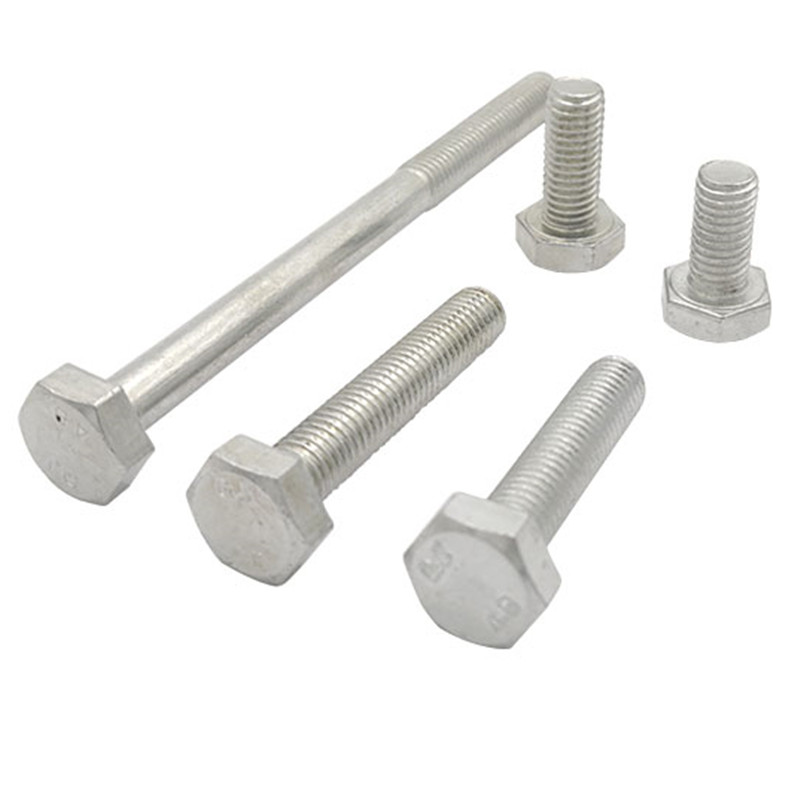
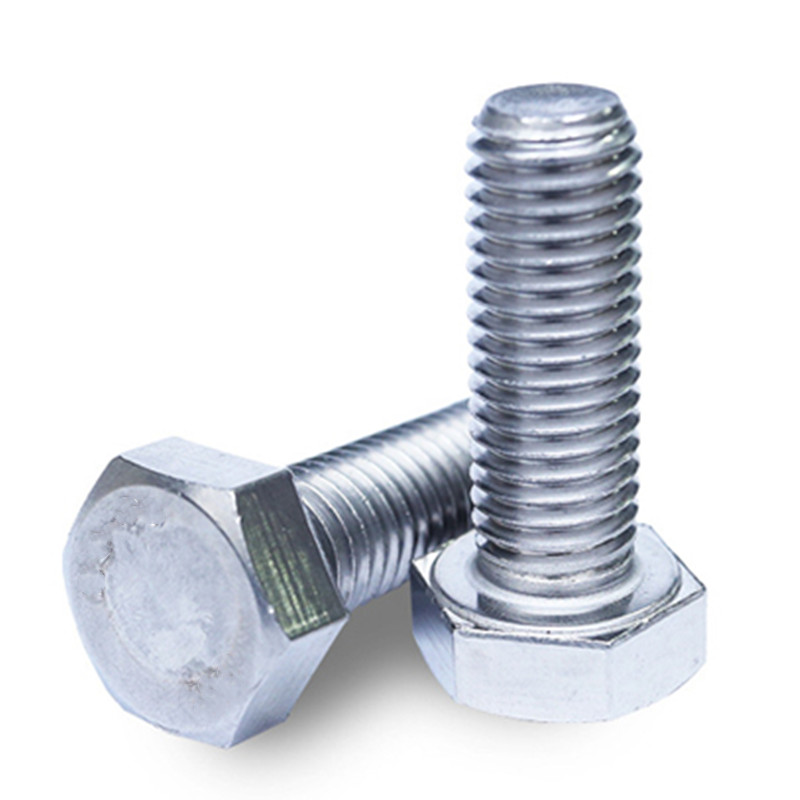
What are the anti-corrosion treatment methods for hexagon head bolts?

When using hexagon head bolts, anti-corrosion treatment is a very important requirement. Depending on the corrosion conditions, different treatment methods can be used.

1) Oxidation

Since it hardly has the ability to prevent rust due to blackening, it will quickly rust without oil. The torque preload consistency of the blackened square column template is also poor. If improvement is needed, grease can be applied to the internal thread during assembly and then tightened.

2) Sherardizing

Sherardizing is a solid metallurgical thermal diffusion coating of zinc powder. Its uniformity is good, and a uniform layer can be obtained in the threads and blind holes of hexagon head bolts. Its processing process is pollution-free and environmentally friendly.

3) Electro-galvanized

Hydrogen embrittlement is prone to occur in the electrogalvanizing process, and the consistency is poor. Connect and assemble with a square column template with a height of 500. When butting and assembling hexagon head bolts, please pay attention to the consistency of the socket interface. You can take an auxiliary bracket, open the auxiliary bracket, and clamp the auxiliary bracket to the wooden side of the junction of the two square column templates according to the marked position, and tighten it on the other side of the same height to mark the position. First place a single piece of toggle clamp horizontally on the auxiliary support. Place the elbow up so that the end of the second clip passes through the curved space of the clip head, and then place it horizontally on the auxiliary support. In order to improve the torque-pre-tightening force consistency, the method of coating lubricating substances after plating can also be used to improve and increase the torque of the hexagon head bolts.

4) Cadmium plating

The corrosion resistance of cadmium coating is very good, especially in the ocean atmosphere, its corrosion resistance is better than other surface treatments. The waste liquid treatment in the cadmium electroplating process is expensive, and the price is about 15-20 times that of electro-galvanized zinc. Therefore, it is not suitable for hexagonal head bolts in general industries, but suitable for fasteners for oil drilling platforms and HNA aircraft.

5) Chrome plating

The chromium coating is very stable in the atmosphere, is not easy to change color and lose luster, has high hardness and good wear resistance. Chrome plating on hexagon head bolts is usually used for decoration.

Decho is a professional supplier on all kinds of bolts and nuts products . If you need any for your project , pls contact us by email [email protected]

How should the bolts be maintained?

Bolt fasteners have become a very important part of the mechanical field, which means that we usually need to pay attention to the maintenance and maintenance of bolts, so that they can play the greatest role in the mechanical field. If they are not standardized in use, they will reduce Its service life. For the maintenance of bolts, we should do the following

1. When heating the standard parts, it should be noted that they should be stacked reasonably. If there is a deviation, the standard parts will be slightly oxidized in the quenching oil, and there will be a phenomenon of discoloration when the tempering is delayed. , If you use ether to soak it again, oily impurities are very likely to appear.
2. Standard parts are generally cleaned with silicon-hydrochloric acid cleaning agents after quenching. They must be cleaned first and then rinsed. Be careful when rinsing them, and thoroughly check the rinsing tank to avoid leaving other substances. In the above, and the water used for rinsing must be changed frequently, otherwise the products produced may have quality problems.
3. When the standard parts are about to be heat-treated, they must be cleaned thoroughly, especially the alkaline substances remaining on the surface of the standard parts. If the impurities cannot be completely removed, the standard will be removed at high temperature. The part is burned, and when it is tempered again, it will make the standard part a waste.
4. If the quenching oil cannot be replaced in time when it is in use, it will cause pollution residues and black stripes on its appearance, which will cause its appearance to be very unsightly.

Decho is a professional supplier on bolts and nuts products . If you need any , pls contact us by email [email protected]

What is the correct installation method for stainless steel flanges?

What is the correct installation method for stainless steel flanges?

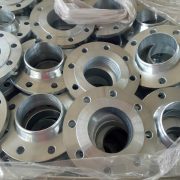
1. the stainless steel flange should have sufficient strength and not deform when tightened. The flange sealing surface should be flat and clean, and the oil stains and rust spots should be carefully cleaned up when installing the stainless steel flange.

2.the gasket should have good oil resistance and anti-aging properties, as well as good elasticity and mechanical strength. When installing stainless steel flanges, seal gaskets of different cross-sections and sizes should be selected according to the shape of the connection, and placed correctly.

3. the fastening force of the stainless steel flange should be uniform, and the compression of the rubber gasket should be controlled at about 1/3. In addition, stainless steel flanges are used according to normal methods and principles in actual use. Stainless steel flanges ensure quality and value in use, and are used and installed in accordance with normal use standards. There are no certain quality and performance issues. The stainless steel flange is not a simple mechanical part in the usual sense. The stainless steel flange is a mechanical product carrier that contains abundant technical connotations, which is used in many equipment processing. Hydraulic oil stainless steel flange is a disc-shaped part, the most common in pipeline engineering, stainless steel flanges are used in pairs. Any connecting parts that are bolted on two planes and blocked at the same time are generally called ” “Flange”, such as the connection of ventilation pipes, this type of part can be called “flange type parts”. But this kind of connection is only a part of the equipment, such as the connection between the flange and the water pump, it is not good to call the water pump “method” “Blue parts”. Smaller ones, such as valves, can be called “flange parts”. In pipeline engineering, stainless steel flanges are mainly used for pipeline connection. In the pipelines that need to be connected, a variety of flanges are installed, low-pressure pipelines can use wire flanges, and welding flanges for pressures of more than 4 kg. Add sealing points between the flanges, and then fasten them with bolts. Flanges with different pressures have different thicknesses and use different bolts. Water pumps and valves, when connected to pipelines, are also made of parts of these equipment The corresponding flange shape is also called flange connection.

Decho is a professional supplier of flange products . If you need any , pls contact us by email [email protected]

Weldability and its test evaluation for carbon steel material

Carbon steel weldability and its test evaluation

1. Welding:

A process in which two objects are combined between atoms to form an inseparable whole by heating or pressing, with or without filling materials.

2. Weldability:

refers to the ability of homogeneous or dissimilar materials to be welded to form a complete joint and meet the expected use requirements under the conditions of the manufacturing process.

3. The four major factors that affect weldability are:

material, design, process and service environment.

4. The principles for assessing weldability mainly include:

①Assess the tendency of welding joints to produce technological defects, and provide a basis for formulating reasonable welding procedures;

②Assess whether the welded joints can meet the requirements of structural serviceability; design new welding test methods to meet the following requirements The stated principles: comparability, pertinence, reproducibility and economy.

5. Carbon equivalent:

The content of alloying elements in steel is converted and superimposed according to the equivalent of several carbon content, which is used as a parameter index to roughly evaluate the cold crack tendency of steel.

6. Oblique Y-shaped groove butt joint crack test:

The purpose is mainly to identify the cold crack tendency of the first layer of low-alloy high-strength steel welds and HAZ, and it can also be used to develop welding procedures.
1) Preparation of the test piece, the thickness of the welded steel plate δ=9-38mm. The grooves of the butt joints are processed by mechanical methods, and the two ends of the test plate are welded within a range of 60mm, and the two-sided welding is adopted. Take care to prevent corner deformation and incomplete penetration. Ensure that there is a gap of 2mm at the weld of the sample to be welded in the middle.
2) Test conditions: The electrode selected for the test weld matches the base metal. The electrode used should be strictly dried. The diameter of the electrode is 4mm, the welding current (170±10) A, the welding voltage (24±2) V, and the welding speed ( 150±10) mm/min. The test welds can be welded at various temperatures, and the test welds are welded only one line without filling the groove. After welding, let it stand and cool down for 24 hours, and then take samples and conduct crack detection.
3) Detection and calculation of crack rate. Use the naked eye or hold a 5-10 times magnifying glass to detect whether there are cracks on the surface and section of the weld and heat-affected zone. It is generally believed that when the surface crack rate of low-alloy steel “Xiaotieyan” test is less than 20%, cracks generally do not occur.

7. Latch test:

purpose, mainly to evaluate the hydrogen-induced delayed cracking tendency of steel. With other equipment, it can also measure reheat crack sensitivity and laminar sensitivity.
1) For the preparation of the test piece, take the welded steel processing or cylindrical bolt test bar, take samples along the rolling direction and indicate the position of the bolt in the thickness direction. There is a ring or spiral gap near the upper end of the test bar. Insert the pin test rod into the corresponding hole of the bottom plate so that the notched end is flush with the surface of the bottom plate. For plug test rods with annular notches, the distance a between the notch and the end surface should be such that the penetration depth of the weld bead is tangent to or intersects with the cross-sectional plane of the notch root, but the penetration of the notch root circumference shall not exceed 20%. For low alloy steel, the a value is 2mm when the welding heat input is E=15KJ/cm.
2) In the test process, according to the selected welding method and strictly controlled process parameters, a layer of surfacing weld bead is melted on the bottom plate, the center line of the weld bead passes through the center of the sample, and the penetration depth should be such that the tip of the notch is located in the heat affected zone In the coarse-grained region, the weld bead length L is about 100-150mm. When welding, the cooling time value t8/5 value of 800-500℃ should be measured. When welding is not preheated, load it when it is cooled to 100-150℃ after welding; when preheating before welding, it should be 50- higher than the preheating temperature. Load at 70°C. The load should be applied within 1 min and before cooling to 100°C or 50-70°C higher than the preheating temperature. If there is post-heat, load it before post-heat. When the test bar is loaded, the bolt may break within the duration of the load, and record the load time.

Decho is a professional supplier on carbon steel pipes . If you need any , pls contact us by email [email protected]

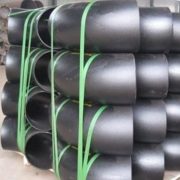
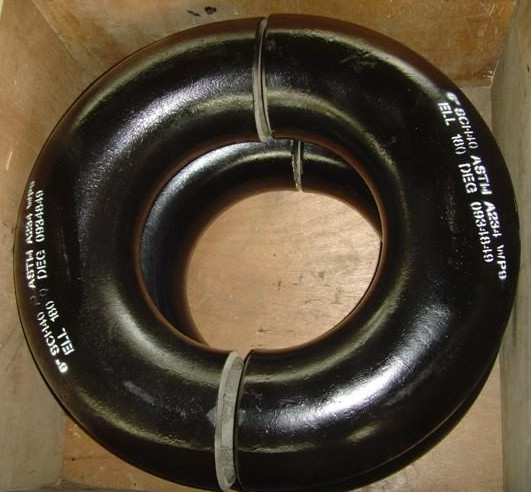
What are the technical requirements for elbows in engineering projects?

What are the technical requirements for elbows in engineering projects?

1. Since most of the pipe fittings are used for welding, in order to improve the welding quality, the ends are beveled, with a certain angle and a certain side. This requirement is also strict, how thick the side, how much angle and deviation The scope is stipulated. The surface quality and mechanical properties are basically the same as the pipe. For the convenience of welding, the steel grade of the pipe fitting and the pipe being connected is the same.

2. All pipe fittings must undergo surface treatment, and the oxide scale on the inner and outer surfaces shall be sprayed off by shot blasting, and then coated with anticorrosive paint.

3. For the packaging requirements of small pipe fittings, a wooden box is required, about 1 cubic meter, and the number of elbows in this box cannot exceed one ton. Sets are allowed, that is, large sets and small sets, but the total weight generally cannot exceed 1 ton. . For large-diameter elbows, single packaging is required, such as 24″ must be individually packaged. The other is the packaging mark, which must indicate the size, steel number, batch number, manufacturer’s trademark, etc.

Decho is a professional supplier on elbow fitting products . If you need any material for your project , pls contact us by email [email protected]
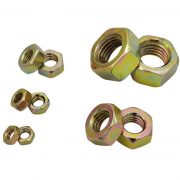
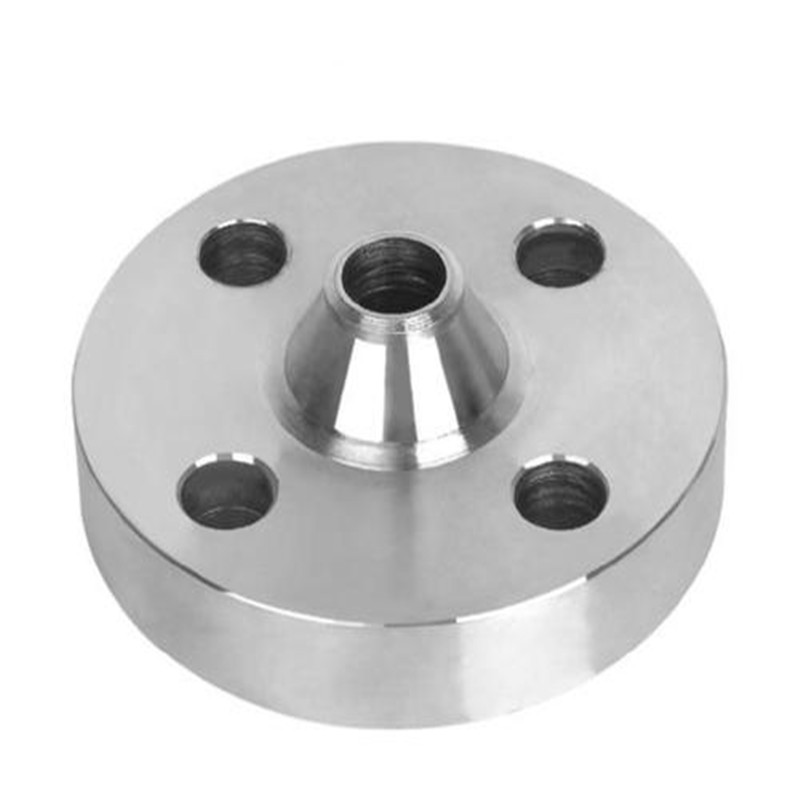
Features and structure shape of butt welding flange

Butt welding flange is a kind of pipe fittings, which refers to the flange with neck and the transition of round pipe and butt welding with the pipe.

Butt welding flanges are not easy to deform, have good sealing, and are widely used. They have corresponding rigidity and elasticity requirements and reasonable butt welding thinning transition. The distance between the welding port and the joint surface is large, and the joint surface is protected from welding temperature deformation. The horn-shaped body structure is suitable for pipelines with large fluctuations in pressure or temperature or high temperature, high pressure and low temperature pipelines. It is generally used for the connection of pipelines and valves with a PN greater than 2.5MPa; it is also used for transporting expensive, flammable and explosive On the pipeline of the medium.

Production material

WCB (carbon steel), LCB (low temperature carbon steel), LC3 (3.5% nickel steel), WC5 (1.25% chromium 0.5% molybdenum steel), WC9 (2.25% chromium), C5 (5% chromium% molybdenum), C12 ( 9% chromium 1% molybdenum), CA6NM (4 (12% chromium steel), CA15(4) (12% chromium), CF8M (316 stainless steel), CF8C (347 stainless steel), CF8 (304 stainless steel), CF3 (304L stainless steel) ), CF3M (316L stainless steel), CN7M (alloy steel), M35-1 (Monel), N7M (Haast Nickel Alloy B), CW6M (Hasta Nickel Alloy C), CY40 (Inconel)

Connection form : One-sided welding, double-sided nut connection.
Product features : Beautiful appearance, smooth surface, acid and alkali resistance, anti-corrosion, and strong texture performance.
Production process : The material is cut in the sub-oxygen furnace, the whole is forged or the finished product is forged and cut.
Processing method: High-precision CNC lathe turning, CNC radial drilling and drilling.

Product parameter
(1) The diameter of the center circle of the bolt hole: 50mm—-2130mm
(2) Bolt hole diameter: 11mm-30mm
(3) Flange thickness: 12mm-58mm
(4) Tube outer diameter: A(17.2-2032MM) B(14-2020MM)
(5) Flange inner diameter: A (18-2036MM) B (15-2024MM)
(6) Theoretical weight of flange: 0.36kg–234.6kg (DN1800)

Decho is a professional supplier on flanges , if you need any for your project , pls contact us by email [email protected]
What are the connection methods of wear-resistant ceramic pipes?

Wear-resistant ceramic pipes are widely used in the industrial field, especially in high-wear working environments, such as power plants, cement plants, mines and other enterprises. Wear-resistant ceramic pipes reflect the incomparable advantages of other products.

Wear-resistant ceramic pipe connection method

1. Fixed flange connection

Fixed flange connection means that the flange is directly welded to the pipeline and connected by bolts. However, once the flange is welded, the bolt hole cannot be adjusted, so some drawings will mark the angle of the bolt hole.

2. Live flange connection

The live flange welding head is turned up, so that the bolt hole can be adjusted, and there is no need to correct the position of the bolt hole when connecting with another flange.

3. Welding method

Glue is needed to fix wear-resistant ceramics, but the glue cannot withstand the high temperature during welding. Because the temperature of steel pipe welding is very high, it can be hundreds of degrees in an instant, and the heat transfer speed of steel is very fast, so the welding place needs to keep a certain distance from the ceramic. Leave a distance of at least 2 cm, which is generally called a 2 cm welding end.

Precautions for installation of wear-resistant ceramic pipes

1. In the process of handling and installation, wear-resistant ceramic pipes should be handled with care to avoid serious collisions. In particular, avoid direct contact with or impact on end ceramics by metal equipment.
2. When the wear-resistant ceramic pipe needs to be cut during the installation process, it can be cut with silicon carbide grinding wheel or plasma cutting machine, and gas cutting is not allowed.
3. When the wear-resistant ceramic pipeline is installed, the center line of the pipeline and the pipeline should be aligned to ensure that the two ends are connected accurately, and the amount of misalignment of the two ends should be controlled within 1.0mm.
4. When the flexible pipe socket is used to connect and install the pipeline, the double-end insertion length of the flexible pipe sleeve is adjusted symmetrically. Since the coefficient of thermal expansion of the wear-resistant ceramic pipe is 1/2 of that of the steel pipe, the expansion gap can be reduced by 3-5mm.
5. When using flange connection, the flange end surface must be flush with the wear-resistant ceramic pipe end surface to ensure the reliability of the connection method.

Decho is a professional supplier on wear resistant ceramic pipes , if you need any , pls contact us by email : [email protected]

What is a bimetal composite wear-resistant pipe?

What is a bimetal composite wear-resistant pipe?

The outer wall of the bimetal composite wear-resistant pipe is made of ordinary seamless steel pipe, which is compounded by a high-chromium cast steel lining through a centrifugal forming process. The outer wall of the elbow is made of shrimp elbows, and the inner layer is made of high-chromium cast steel, which not only has the wear resistance of high-alloy cast steel, but also can withstand pressure, and has higher mechanical properties.

Bimetal wear-resistant pipeline characteristics:

1. Good wear resistance   the hardness of super-hard wear-resistant alloy HRC≥46, with good wear resistance and thermal stability.
2. Excellent impact resistance, metal bonding performance, thermal shock resistance  KMTBCr28 bimetal composite wear-resistant elbow, the bonding surface of the two metals is completely metallurgical, and it is safe and reliable to use. The thermal expansion coefficients of the two are equivalent, and there will be no expansion and contraction. The outer wall of the elbow is made of steel pipe, and the inner lining is made of super-hard wear-resistant alloy. This product not only has the wear-resistant and corrosion-resistant characteristics of high-alloy products, but also has higher mechanical properties and higher impact resistance.
3. Good heat resistance and corrosion resistance. The matrix of super hard alloy material has strong heat resistance and corrosion resistance, and can show good corrosion resistance and wear resistance under high temperature or corrosive environment. Under the interaction of wet state, corrosive media and particle erosion, it is more appropriate to use super-hard wear-resistant alloys used in as-cast state; and under dry conditions where abrasive wear is the main failure mode, use a A super-hard and wear-resistant alloy material that can obtain a martensite matrix through heat treatment.
4. Low composite cost and good quality   The wear-resistant tube is manufactured using international advanced lost foam casting technology, with high yield, good product compactness, uniform thickness and stable quality.
5. Convenient transportation, installation and use   The bimetal composite wear-resistant pipe can be connected by flange, quick joint, direct welding and other methods. Moreover, due to the high impact resistance of the composite pipe, when a partial blockage occurs during the maintenance of the pipeline system, it can be knocked, hammered, or cut, removed, welded, installed and repaired at will.


Decho is a professional supplier of bimetal composite wear-resistant pipe. If you need any for your project, pls contact us by email [email protected]
Welding process of bimetal composite pipe

The outer wall of the bimetal wear-resistant composite pipe is made of ordinary seamless steel pipe, which is compounded by a high chromium cast steel lining through a centrifugal forming process. The outer wall of the elbow is made of shrimp elbows, and the inner layer is made of high-chromium cast steel, which not only has the wear resistance of high-alloy cast steel, but also can withstand pressure, and has higher mechanical properties.

In the bimetal wear-resistant composite pipe lining alloy material, the hardness and wear resistance are high-chromium wear-resistant white cast iron and high-quality alloy wear-resistant cast steel (collectively referred to as super hard wear-resistant alloy). The hard phase of high chromium cast iron is M7C3 type carbide, its hardness reaches HV1500~1800, so it has good wear resistance, and because the structure of this Ka type carbide is rod-like, it has high toughness . On the basis of traditional ingredients, rare metals and boron carbide hardening agents are added, which greatly increases the hardness and fatigue resistance of traditional products and makes their wear resistance better than other products.

This process is suitable for welding requirements of bimetal composite pipe castings:
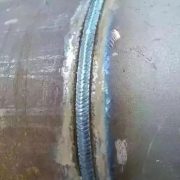
1. When installing the bimetal composite pipe, the pipe and the center line of the pipe should be aligned to ensure that the two ends of the pipe are connected accurately. Due to the high hardness of the high chromium alloy lining, only ordinary steel pipes on the outer wall can be welded, and penetration must be performed. When cutting on site, a plasma cutting machine must be selected for on-site cutting according to the thickness of the composite pipe.
2. Select J507 ordinary welding rod with a diameter of φ4.0mm.
3. Generally, DC electric welding machine is used for welding, and AC electric welding machine can also be used for welding.
4. After the bevel welding at both ends is completed, use the reinforcement hoop in the middle of the weld and continue welding with the outer wall of the composite pipe to ensure the firmness of the weld.
5. Avoid welding under 0℃ or low temperature and humidity.
6. Spot welding, symmetrical welding, and then integral welding should be adopted for welding parts to avoid stress concentration casting cracking.
7. In order to ensure the welding quality of the bimetal composite pipe, the welding surface should be cleaned to avoid defects such as oil stains and slag inclusions.

Decho is a professional supplier on bimetal composite pipe, if you need any , pls contact us by email [email protected]