
What is the difference between PTFE lined pipe and rubber lined pipe?

What is the difference between PTFE lined pipe and rubber lined pipe?

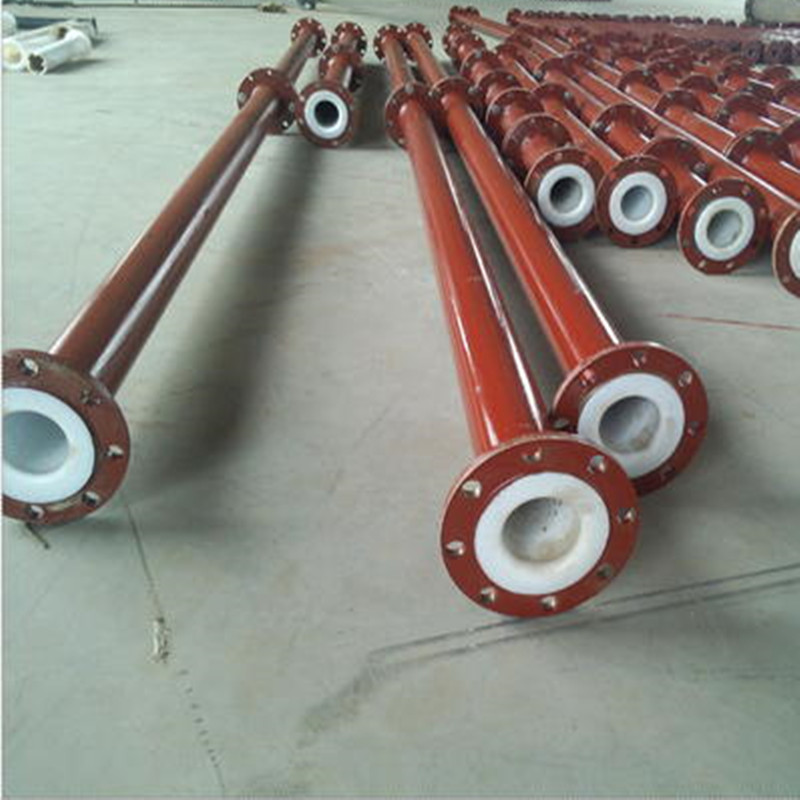
Tetrafluoro is a polymer of tetrafluoroethylen, short for PTFE. Polytetrafluoroethylene (Poly tetra fluoroethylene, abbreviated as PTFE), is generally called “non-stick coating” or “easy to clean material”. This material is resistant to acids, alkalis, and various organic solvents, and is almost insoluble in all solvents. At the same time, PTFE has the characteristics of high temperature resistance, and its friction coefficient is extremely low, so it can be used for lubrication and become an ideal coating for easy cleaning of the inner layer of water pipes.

The tetrafluoroethylene lining uses fluorine’s corrosion resistance, high temperature resistance, strong acid and alkali resistance, excellent adhesion, long service life, and strong penetration resistance. The entire spraying of PTFE is a high-tech work, and its process What are the processes?
1. Special spraying process. Before spraying, the surface needs to be roughened by sandblasting and sprayed with a special primer.
2. The fluoroplastic powder is then charged by a high-voltage electrostatic device, and is uniformly adsorbed on the surface of the workpiece under the action of an electric field.
3. After high temperature baking, the clinker particles will melt into a dense protective layer firmly attached to the surface of the workpiece. For example, a 1mm thick coating film also needs to be sprayed and baked repeatedly 5-6 times, usually the thickest Can be sprayed to 2mm.

Lining tetrafluoroethylene is currently a widely used technology. It makes full use of fluorine’s corrosion resistance, high purity cleanliness, non-stickiness, non-wetting, self-lubricating, abrasion resistance, high and low temperature resistance, and insulation During the construction process, the voltage and current are constantly adjusted to the ideal state to achieve the coating effect.
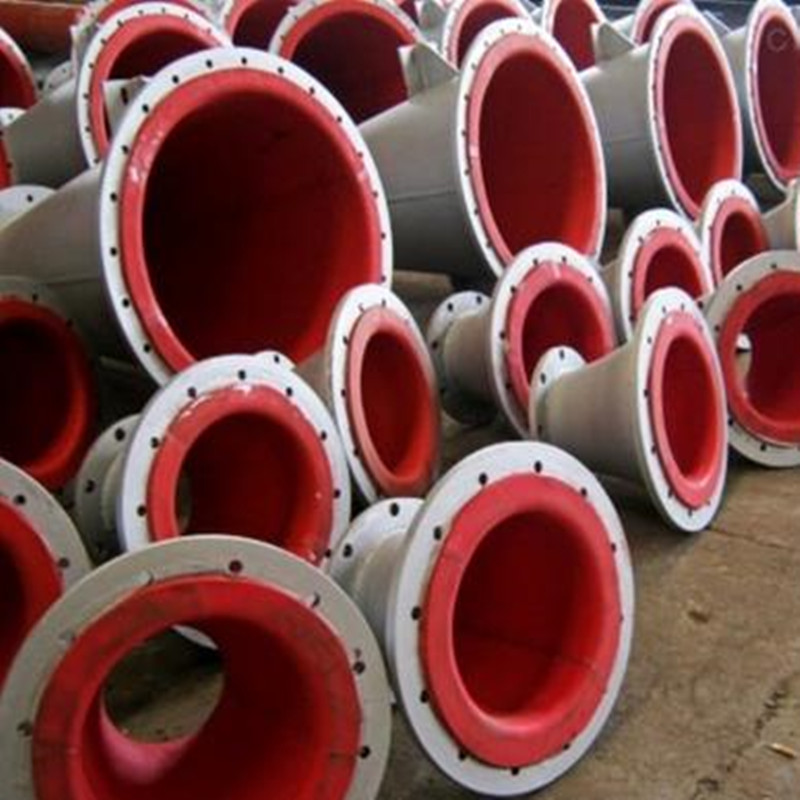
Rubber lining, also known as rubber lining, English translation is rubber lining. It is to stick the processed whole rubber sheet on the metal surface with adhesive to separate the corrosive medium from the metal matrix for the purpose of protection. The rubber used for lining includes natural rubber and synthetic rubber. The rubber used for chemical equipment lining is mostly natural rubber. The main component of natural rubber is a cis-polymer of isoprene, which is vulcanized by vulcanization, and the vulcanized rubber has certain heat resistance and mechanical strength. It can be divided into soft rubber, semi-hard rubber and hard rubber. Hard rubber has good corrosion resistance, aging resistance and strong adhesion to metal; soft rubber has good cold resistance, heat resistance and impact resistance, and has a certain degree of flexibility; while semi-hard rubber is between between the two. Except for strong oxidants and certain solvents, hard rubber can withstand most of the corrosion of inorganic acids, organic acids, alkalis, salts, and alcohols. Therefore, hard rubber lining is used as the main non-metallic anti-corrosion material. Vulcanized rubber can be divided into pre-vulcanized rubber, atmospheric hot water vulcanized rubber and natural vulcanized rubber. Pre-vulcanized rubber should be used in larger pickling equipment.
The above is the difference between the two. Decho can supply you pipeline either with PTFE linning or rubber lining . If you need any for your project , pls feel free to contact us by email [email protected]
PTFE pipeline is the first choice for industrial sewage lining

Steel-lined PTFE pipe is a kind of green plastic pipe with the most anti-corrosion, wear-resisting, energy saving and environmental protection. Its wide application has accelerated the process of new environmental protection roads in mines to a certain extent. It not only realizes the low-carbon and environmental protection of mine operation, but also saves cost and manpower and material resources for mining investment enterprises, makes mine transportation safer and more reliable, and increases transportation speed.

Now, a new type of plastic pipe that meets the needs of society and has been applied-steel lined PTFE pipe. Most industrial sewage requires extremely corrosion-resistant pipelines, because industrial sewage contains corrosive media, and these corrosive media must be toxic and harmful chemicals. To transport and process these toxic and hazardous chemicals, green anticorrosive steel-lined PTFE pipelines are the best choice.

The tetrafluoroethylene pipe fittings are made of ordinary carbon steel pipe as the matrix, and are lined with thermoplastic polytetrafluoroethylene (Teflon or PTFE, F4) plastic with excellent chemical stability, processed by a specific process. It not only has the mechanical properties of steel pipes, but also has the characteristics of high corrosion resistance of tetrafluoroplastics, anti-scaling, and not easy to grow microorganisms. It is an ideal pipeline for transporting strong acids, strong alkalis, industrial salts and strong corrosive gases.

High chemical stability:
It can withstand all strong acids, including aqua regia, hydrofluoric acid, concentrated hydrochloric acid, nitric acid, fuming sulfuric acid, organic acids, etc., strong alkalis, strong oxidants, reducing agents and various organic solvents. Very suitable for feeding high-purity chemicals. The wide temperature range is -30℃~-250℃. The low friction coefficient is generally only 0.04, which is a very excellent self-lubricating material, and the friction coefficient does not change with temperature changes. Excellent anti-adhesion: the inner wall of the tube is not easy to adhere to colloids and chemicals. Excellent aging resistance, can be used outdoors for a long time. Excellent electrical insulation performance, PTFE is a highly non-polar material with good dielectric properties, extremely high electrical resistance, and a dielectric constant of about 2.0, which is the smallest among all electrical insulation materials. High flexibility and resistance to bending. Part of the tube has high transparency, and the internal fluid condition can be easily observed.

Product advantages:
1) High temperature resistance-working temperature up to 250℃
2) Low temperature resistance-has good mechanical toughness, even if the temperature drops to -196 ℃, it can maintain 5% elongation.
3) Corrosion resistance-It is inert to most chemicals and solvents, and can withstand strong acids and alkalis, water and various organic solvents.
4) Weather resistance-has the best aging life among plastics
5) High lubrication-is the smallest friction coefficient among solid materials.
6) No adhesion-it is the smallest surface tension among solid materials and does not adhere to any substance.
7) Non-toxicity|——non-toxicity to organisms

This product is widely used in electric power, chemical, petrochemical, environmental protection and other industries. Decho is a professional supplier on PTFE pipes, if you need any for your project, pls feel free to contact us by email [email protected]
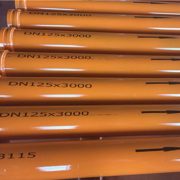
Process and application of self-propagating ceramic composite pipe

1. The principle of self-propagating ceramic composite pipe:

The ceramic composite pipe is manufactured by self-propagating high temperature synthesis + centrifugal casting, that is, the seamless steel pipe is placed in the tube mold of the centrifuge, and the thermite (a mixture of iron oxide powder and aluminum powder) is added to the steel pipe, and the centrifuge tube mold After the rotation reaches a certain speed, the thermite is ignited by electricity, the combustion wave spreads rapidly, and the explosion takes shape. The following violent chemical reactions occur during spreading:
• 2A1+Fe2O3=Al2O3+2Fe+836KJ
• 3Fe3O4+8Al=4AL2O3+9Fe+3256KJ

After the reaction, the products a-Al2O3, ß-Al2O3 and iron, and emit a lot of heat at the same time. Due to the rapid reaction, only a few seconds, the molten reactant is quickly separated according to the specific gravity under the action of centrifugal force. The specific gravity of iron (7.85g/cm3) is twice that of Al2O3 (3.95 g/cm3), and the heavier iron Throwing to the inner wall of the steel pipe by centrifugal force, the lighter Al2O3 is distributed in the inner layer of iron; due to the rapid heat absorption and heat transfer of the steel pipe, Al2O3 and Fe quickly reach the freezing point and solidify in layers; the final ceramic steel pipe is formed separately from the inside to the outside It is a corundum porcelain layer, an iron-based transition layer, and an external steel pipe layer. High-temperature molten iron and Al2O3 liquid contact with the inner wall of the steel pipe to make the inner wall of the steel pipe in a semi-soluble state, so that the iron layer and the steel pipe form a metallurgical bond, and the iron layer and the corundum ceramic layer also form a firm bond.

2. Features of self-propagating ceramic composite pipe

• The composite pipe made by the high-temperature centrifugal synthesis method is a dense corundum ceramic that is fired at a high temperature of 2200 degrees. The dense corundum ceramic and steel pipe are firmly combined by the transition layer.

• Process: Ceramic powder + iron oxide powder + magnesium oxide powder are mixed in proportion (the main component is iron oxide, black), seal both ends of the pipe, add the powder, rotate the pipe, electronic ignition, and sinter on the inner wall of the pipe by centrifugal method. The effect of pipes below ø100 is better. The pipe is generally black.

• Features: high strength, good toughness, impact resistance, good weldability, which solves the contradiction between weldability and wear resistance.

• Wear resistance and high temperature resistance

3. Spontaneous combustion application field


Self-spreading ceramic composite pipes can be used in high temperature areas, with simple production, convenient construction, and low cost. The diameter of the pipe is not more than 600mm, and the wear resistance is lower than that of ceramic patch pipes.

Disadvantages: Due to the short reaction time, the low-temperature phase alumina and molten iron are not completely separated, resulting in the ceramic layer is not dense, the particles are loose, the micro-cracks are many, the quality is brittle, it is easy to partially fall off and fail, and it cannot be compensated after fall off. It can only be made into a straight tube. If it is made into an elbow, the straight pipe must be divided into several sections for welding. The formed elbow is not streamlined, which hinders material transportation and reduces the output force of the equipment

Decho is a professional supplier on self-propagating ceramic composite pipe. If you need any , pls feel free to contact us by email [email protected]
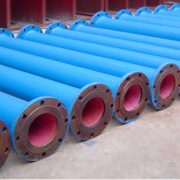
Process and application of integral calcined ceramic composite pipe

The whole calcined ceramic composite pipe is composed of seamless steel pipe, calcined ceramic pipe and filler

Integral calcined ceramic pipeline process

Desulfurization ceramic wear-resistant pipes are assembled by firing ceramic pipe fittings as a whole, and pouring the shaped ceramic pipes inside the steel pipe with special fillers. The alumina content of the ceramic pipe fittings lining the desulfurization wear-resistant pipeline is not less than 95%. 200T dry pressing, sintering temperature is as high as 1670℃. Its advantages are: smooth inner wall, good sealing, and very good wear resistance and corrosion resistance.

Production Process
According to the mold, the ceramic powder is sintered into a ceramic pipe, and then combined with the steel pipe. The outer wall of the ceramic pipe and the inner wall of the steel pipe are assembled by pouring a special filler (cement or epoxy resin) inside the steel pipe, and then isostatically pressing. During the sintering process, the furnace cools quickly, cracks easily, and the process is more complicated. The pipe is generally white.

Application of wear-resistant pipe
• Power plant boiler pulverization system pipes, including pulverized powder conveying pipes, coarse and fine powder separator pipes, coal drop pipes, primary air pipes, secondary air pipes, tertiary pipes and burner pipes of the combustion system, and the discharge of the ash and slag discharge system Slag pipeline, powder return pipeline, dry ash transportation pipeline;
• Steel plant raw material conveying pipes, receiving pipes, dust removal pipes, ash discharge pipes, ash falling pipes, batching mixing pipes, mill outlet pipes, coal-fired pipes, pulverized coal pipes, separator pipes, burner square pipes, etc. ;
• Cement plant separator outlet pipes, separator inlet pipes, dust collection pipes, vertical mill outlet pipes, circulating air pipes, coal mill high temperature fan air pipes, discharge pipes and other worn bends.

Decho is a professional supplier on integral calcined ceramic composite pipe. If you need any for your project , pls feel free to contact us by email [email protected]
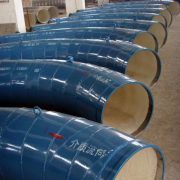
Ceramic patch wear-resistant pipe and fittings

Ceramic composite steel pipe: straight pipe, elbow pipe, reducer pipe, tee, pipeline automatic compensator and special-shaped pipe of various specifications between φ50-φ1400

What is a ceramic-lined steel pipe?

Ceramic lined steel pipe is a kind of composite pipe that combines ceramic and metal organic. Ceramic steel pipe combines the advantages of high alumina hardness, good chemical inertness and steel, and has excellent wear resistance, corrosion resistance, heat resistance and heat resistance Impact and resistance to mechanical impact, used for power plant pulverized coal, slag, mine powder, tailings, backfill, coal in coal mines, beneficiation plants, coke particles in coking plants, and sintering plant materials. The service life is 15 longer than ordinary steel pipes. It can also be used for the transportation of molten aluminum and corrosive media. The thermite-centrifugal method prepares the ceramic-lined steel pipe using the high temperature generated by the reaction itself to melt the reaction products and separate them under the action of centrifugal force to form a steel pipe lined with alumina ceramics, with low energy consumption and fewer processes.

Performance of ceramic lined steel pipe:

1. Wear resistance: The Al2O3 content in the inner ceramic layer of the ceramic composite steel pipe is greater than 90%, the hardness is HV1000-1600, and the density is 3.8-3.97g/cm3, so it has extremely high wear resistance, and its wear resistance is higher than that after quenching The medium carbon steel is ten times higher than the tungsten carbide.
2. Corrosion resistance Ceramics are neutral materials with stable chemical properties, excellent corrosion resistance and acid resistance, resistance to various inorganic acids, organic acids, organic solvents, etc., and its corrosion resistance is more than ten times that of stainless steel.
3. Heat resistance The ceramic layer is dense corundum with a linear expansion coefficient of 6-8×10⁻⁶/℃. Excellent heat resistance, can withstand temperatures above 2000℃, and can work for a long time in the range of -50℃~900℃.
4. Mechanical properties: It has excellent mechanical properties. Its crush strength is 300-600MPa, compressive shear strength is 20-30MPa, and the mechanical impact test has no obvious cracks under 50t energy impact for 15 times.
5. Easy to weld: The ceramic-lined composite steel pipe can be connected by welding the outer steel pipe.
6. Convenient transportation and installation: Compared with steel pipes, wear-resistant alloy cast pipes, cast iron pipes and cast stone pipes, ceramic-lined composite steel pipes are relatively light in weight and easy to transport and install. Ceramic lining composite steel

Ceramic lined steel pipe connection method

The pipe can be connected by welding, flange, flexible quick joint, etc., which is very convenient for installation.

Application of ceramic lined steel pipe

Ceramic-lined steel pipes can be used for a variety of pipes in thermal power, steel, non-ferrous metals, mining, coal, chemical, petrochemical and other industries due to their excellent performance:
1. Pipelines requiring high wear resistance: coal and ash (slag) transportation pipelines in thermal power plants, tailings and concentrate transportation pipelines in concentrators, port slurry and sediment transportation pipelines, pulverized coal slurry transportation pipelines, etc.
2. Various pipelines requiring high corrosion resistance.
3. Molten aluminum liquid transportation pipeline.
4. Various channels requiring high wear resistance, high corrosion resistance and high temperature resistance. Economic benefits: Compared with wear-resistant alloy cast iron pipes and cast stone pipes, ceramic-lined steel pipes are used as wear-resistant pipes. Due to the light weight per unit length, the support and hanger costs, handling costs and installation costs are reduced, which greatly reduces the project cost .

Decho is a professional supplier on Ceramic patch wear-resistant pipe and fittings. If you need any for your project , pls contact us by email [email protected]
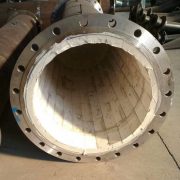
The advantages and disadvantages of ceramic chip lined wear-resistant pipes

Features of ceramic chip lined wear-resistant pipes:

Paste the ceramic sheet on the steel pipe with high temperature wear-resistant glue to play the role of wear-resistant. The pipe is generally white. Generally used for large diameter pipes


  • Advantages: ceramic patch wear-resistant pipes have good wear resistance (compared to spontaneous combustion) and long service life
  • Disadvantages:

1) Due to the temperature of the adhesive, it is not resistant to high temperature and easy to fall off

2) If the medium is corrosive, it is easy to corrode the steel pipe between the gaps of the patch.

Decho is a professional supplier on ceramic chip lined wear-resistant pipes. If you need any for your project , pls feel free to contact us by email [email protected]
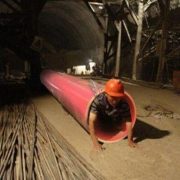
Why choose ultra-high molecular polyethylene material as the material of the tunnel escape pipe? What are the installation standards?

Tunnel escape pipe


The escape pipeline used in the tunnel is made of ultra-high molecular weight polyethylene. The installation of escape pipelines in the tunnel is generally based on prevention and facilitates escape. The tunnel escape pipeline plays a role of secondary defense. The polymer escape pipeline is light in weight, easy to disassemble and transport; the pipeline has good toughness and high impact resistance. It deforms instantly when impacted by a strong external force, absorbs a large amount of impact energy, and then quickly restores its original shape, providing emergency rescue for highway tunnel construction escape Safe and reliable guarantee.

The tunnel escape pipe is a pipe made of ultra-high molecular weight polyethylene. It is simple, pure and not exaggerated because of its appearance, and its nature is solid, durable and not perishable. The quality of the pipe is much higher than that of commonly used pipes. It has extremely high impact resistance and cannot be broken by external impact. It will not be deformed after being hit by a large stone and can be restored to its original appearance.

Installation of escape pipe


The main purpose of the installation of ultra-high polymer escape pipes is to prevent and avoid risks. The ultra-high polymer escape pipes are called “amazing engineering plastics”, which have very strong impact resistance and wear resistance, even if they are strongly affected by the earth’s crust. Changes, such as earthquakes, will not break the pipeline, but will only slightly deform. It is almost impossible to measure the impact resistance limit of UHMWPE pipes. Therefore, the use of escape pipes as escape pipes is very cost-effective.


Decho is a professional supplier on tunnel escape pipes. if you need any for your project , pls feel free to contact us by email [email protected]
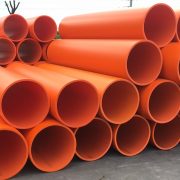
What is the principle of the escape pipe setting?

What is the principle of the escape pipe setting?

1.Adequate ventilation, tunnel escape ducts and alarm facilities should be set up at the construction site as required.
2.Tunnel construction needs to implement a time-limiting system for operations, and the dangerous projects must be stopped at night.
3.In terms of tunnel escape pipeline support, the construction unit must strictly manage the tunnel construction support construction process, and it is strictly forbidden to support lagging and safe step distance exceeding the standard.
4.The construction unit should select a qualified company to carry out advanced hydrogeological forecasting and measurement of tunnels. The advanced geological forecasting and measurement company shall improve the quality of forecasting and monitoring, and provide timely and accurate feedback to entry.
5.In terms of tunnels, there must be a special safety construction plan, and a tunnel safety team should be established with sufficient safety personnel.
6.The construction company shall formulate emergency response plans in accordance with regulations, establish emergency rescue teams, allocate emergency rescue personnel, etc., and hold emergency escape drills on a regular basis, such as construction, supervision, and design.
7.Under conditions, mechanized operations should be implemented for escape pipes from tunnels over 1km to reduce the number of operators. Regarding the management of tunnels below 1km, the entry and exit of personnel and vehicles must also be managed in a standardized manner, and unrelated personnel are strictly prohibited from entering.

Standard escape pipeline options:

1.Ensure that the thickness of the tunnel escape pipe is not less than 30mm
2.The length of each tunnel escape pipe is 3 meters
3.The tunnel escape pipe can be manually disassembled, and the connection is firm and safe.
4.When the tunnel escape pipe is temporarily dismantled and moved, it shall be dismantled section by section, and it is strictly prohibited to dismantle it in place at one time.
5. The tunnel escape pipeline should be flat, dry and smooth, and must not be used for purposes other than emergency escape.


Decho is a professional supplier on escape pipes . If you need any for your project , pls do not hesitate to contact us by email [email protected]
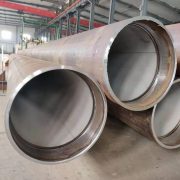
What do you know about bimetallic pipes?

Introduction of Bimetal Wear-resistant Pipes

The bimetallic composite pipe is a new type of wear-resistant pipe developed by our company. The outer layer of the straight pipe is made of ordinary steel pipe, and the high chromium cast iron is formed through the casting process. The inner lining is compounded. The outer wall of the elbow adopts a hot simmering elbow, and the inner layer is cast with high chromium cast iron. Compared with the traditionally used wear-resistant alloy cast iron, wear-resistant alloy cast steel, steel-ceramic composite pipe and cast stone pipe, the pipeline has many advantages.

Production Process


In the production process of the bimetal wear-resistant pipeline, the straight pipe adopts casting technology. This technology is that the liquid wear-resistant metal material is fused to the surface of another metal to form a composite steel body after hot melting, achieving the purpose of true metallurgical bonding. The bonding layer The shear strength is higher than that of the body metal, which fully realizes the mechanical complementarity of the base layer and the wear-resistant layer; the elbow, tee, reducer and other pipe fittings adopt the lost foam vacuum suction casting compound process, which is advanced in technology and effectively solves the problem The problem of compounding, the elbow and various other special-shaped pipes can be integrated as a whole, without changing the flow trajectory of the material in the elbow, and greatly reducing the resistance of material transportation.

In the selection of material, the outer wall of the steel is made of carbon steel, which ensures that the wear-resistant tube has high mechanical strength and impact resistance; the wear-resistant layer of the lining is made of wear-resistant alloy steel series, which is mainly added with Cr-Ni-Mo -Cu-RE and other alloys, after quenching and tempering heat treatment process, make the alloy steel not only have strong wear resistance and corrosion resistance, but also have higher mechanical strength and impact resistance.

Features of bimetal wear-resistant pipe products

1. Good wear resistance, giving full play to the excellent wear resistance characteristics of high chromium casting (KMTBCr20Mo3CuRe). The wear layer is made of high complex alloy material. The macroscopic hardness can reach HRC55 or more. The structure contains a large amount of M7C3 type hard. Carbide, its micro-hardness is HV1500-1800, and its anti-abrasive and wear-resistance performance is more remarkable. .

2. High pressure bearing, suitable for any pressure level. The inner lining is tightly combined with the outer steel pipe. The special process is adopted to form a weld between the composite layers to ensure operational reliability.

3. Good resistance to mechanical shock, thermal shock, wear and corrosion, and high temperature resistance: Since the matrix is ​​mainly composed of austenite and carbide, there is a large amount of Gr element in the solid solution, so it can be significant in corrosion or high temperature environments The bimetal wear-resistant elbow has good wear resistance, corrosion resistance and high temperature resistance.

4. Convenient installation and connection, flanges can be used, arbitrary cutting, welding, and good overall performance: The bimetal composite wear-resistant pipe adopts ordinary steel pipe outside and high-end wear-resistant alloy inside, which forms a better metallurgical combination at the same time , It also gives full play to the wear resistance and corrosion resistance of high complex alloys and the good mechanical strength and impact resistance of ordinary steel pipes. It solves the contradiction between weldability and wear resistance that are difficult to reconcile with a single material. Able to achieve the best fit.

Application scope of bimetal wear-resistant elbows and pipes:

1. Power industry: raw coal system silos, hoppers, hoppers, powder feeding pipelines,
2. Coal industry: heavy ore coal preparation pipelines in coal preparation plants, wet coal conveying systems, sediment backfilling in mining
3. Mining industry: mine filling, concentrate transportation, tailings transportation pipeline
4. Iron and steel industry: coke particle transportation pipeline, coal mill pipeline, separator, elbow, cone, separation baffle
5. Cement industry: coal powder transportation. Mineral powder transportation
6. Machinery industry: lining of equipment for pulverizing, dust removal and ash discharge systems of power plants, and lining of dust removal equipment in steel plants.

Decho is a professional supplier on bimetallic pipes. If you need any for your project , pls contact us by email [email protected]
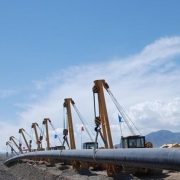
Manufacturing process of dredging sand pumping pipe

The daily application of dredging sand pumping pipes is mainly to discharge silt from rivers, lakes and other places. The accumulation of silt and salt in some river ports will affect the normal navigation of our ships. At this time, we need to The sludge is discharged by the dredging sand pumping pipe, which has high efficiency and low cost, which is inseparable from its good production technology.

1. The dredging and sand pumping pipe is made of ultra-high molecular weight polyethylene powder plus a small amount of paraffin wax and carbon black through high temperature melt extruding extruder.
2. Ultra-high pipes with different diameters and thicknesses need to choose different molds.
3. The length can be made arbitrarily according to the actual needs of users.
4. Color Masterbatch can be added to the raw materials according to user needs. Generally, carbon black is added to produce black UHMWPE pipes, which can be used for anti-sun and ultraviolet radiation.

How to reduce the clogging of the dredging sand pumping pipe?
During the construction of the dredging and sand pumping pipes, the problem of blockage of the wear-resistant pipes will be encountered, which will affect the progress of the project. There are many factors that affect the blockage of wear-resistant pipes. Including the size, shape, concentration, specific gravity, tube wall roughness, fluid viscosity, etc. of the solid particles in the mud mortar. The main factors are as follows:
(1) The larger the particle size of the mud and mortar, the larger the particle size of the conveying medium, which will increase the sedimentation speed of the particles in the mud and cause pipeline blockage, thereby increasing the resistance loss of the dredging pipe. Therefore, reducing the particle size in the slurry can effectively improve pipeline blockage and reduce the pipeline transportation resistance of the slurry.
(2) The surface roughness of the dredging pipe, the roughness of the inner wall of the pipe will increase the resistance coefficient of the pipe. Therefore, ultra-high molecular weight polyethylene pipes with smooth surfaces should be selected to effectively reduce pipeline resistance.

The above are the reasons for the blockage of the dredging and sand pumping pipes. After knowing these reasons, we need to prescribe the right medicine. Different types of wear-resistant pipes have different prices, so it is very important to choose cost-effective wear-resistant pipes. From the transportation and installation of the pipeline to the normal use in the future, choose the cost-effective wear-resistant pipe according to the wear rate of the transmission medium during use.

Different types of dredging and sand pumping pipes have their own product characteristics and are used in different fields. When choosing, wear-resistant pipes should be customized according to their own working conditions and technical requirements. Some require only abrasion resistance, some require abrasion resistance and good corrosion resistance, and some require high temperature or low temperature resistance. Only by choosing suitable wear-resistant pipes can the dredging and sand pumping pipes last longer and the medium transport effect can be better.

Decho is a professional supplier of dredging sand pumping pipe. If you need any for your project , pls feel free to contact us by email . [email protected]