Knowledge about wear-resistant pipes

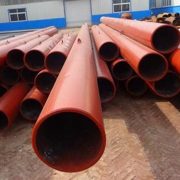
Wear-resistant pipes mainly include wear-resistant elbows, straight pipes, tees, small and small ends, square and round joints, reducing pipes and other structural parts, which are mainly used for pneumatic, pumping slurry and other material transportation pipelines. Because the conveying medium has the characteristics of high hardness, fast flow rate, and large flow rate, it can effectively reduce the long-term continuous impact, wear and corrosion of the conveying medium on the pipe wall, which causes the pipeline to fatigue and gradually wear through.

1. Definition of wear-resistant pipe

According to different wear conditions, there are also different material choices for wear-resistant pipeline lining. Wear-resistant ceramic pipes lined (lined with aluminum oxide, silicon carbide, zirconia, silicon nitride, Sialon, aluminum nitride, boron nitride, etc.); wear-resistant alloy pipes; tortoise shell mesh wear-resistant pipe fittings; steel rubber resistant Grinding pipe; steel-plastic wear-resistant pipe; wear-resistant cast stone pipe; wear-resistant self-propagating composite pipe; rare earth alloy wear-resistant pipe, etc.

2. The main application of wear-resistant pipes

Wear-resistant elbows are widely used in the following industries in addition to ash removal, slag discharge pipes, powder feeding and powder returning pipes, and desulfurization pipes in coal-fired power plants:

Mines: coal water slurry, coal washing slime, mine filler, pulverized coal in the coal industry;
Metal mines: wear-resistant elbows for conveying concentrates and tailings;
Metallurgy: blast furnace coal injection and slag conveying pipelines in iron and steel plants; CAO, zinc dust conveying pipelines, steel conveying ferroalloys, furnace refining and other preferred wear-resistant elbows;
Cement plant: raw slurry conveying, coal powder conveying, elevator unloading, finished cement pneumatic conveying and unloading, concrete conveying wear-resistant elbow of rotary kiln wet production line.
Chemical plant: pulverized coal transportation pipeline, silicon powder and other raw materials transportation wear-resistant elbow.

3. Detailed use of wear-resistant pipes

It has spread to the industries of electric power, metallurgy, coal, petroleum, chemical industry, building materials, machinery, etc., and is developing rapidly. When the abrasive material is transported in the wear-resistant pipe (such as ash, coal powder, slag powder, tailings, cement, etc.), there is a problem of rapid wear of the wear-resistant pipe, especially the elbow wears faster . When the gas, liquid or solid with strong corrosion is transported in the wear-resistant pipeline, there is a problem that the wear-resistant pipeline is corroded and quickly damaged. When materials with higher temperature are transported in wear-resistant pipes, there is a problem that the use of heat-resistant steel pipes is very expensive. After the wear-resistant pipes are on the market, these problems are solved. Wear-resistant pipelines are widely used for the transportation of severely worn mine fillers, ore concentrates and tailings. Wear-resistant pipelines such as powder delivery, slag removal and ash transportation in coal-fired thermal power plants are also very suitable. Wear-resistant pipelines are ideal wear-resistant pipelines for transporting strongly corrosive acids, alkalis, salts, and abrasive solids and liquids. Wear-resistant pipelines are very safe and reliable when used in high-temperature corrosion, high-temperature wear or high-temperature ablation.

Decho is a professional supplier of ceramic wear resistant pipes, if you need any material for your project , pls feel free to contact us by email [email protected]
Three minutes to understand the process of wear-resistant ceramic construction and the precautions of the construction process

General wear-resistant products are mainly used in severely worn industries such as thermal power, steel, smelting, machinery, coal, mining, chemicals, ports and docks; they can be installed in thermal power plants from small units of 50,000 kilowatts to large units of 1 million kilowatts. It can be installed and used in its coal conveying, pulverizing, ash discharge, and dust removal systems; it can also be installed and used in the conveying, batching, and dust removal systems of the sintering branch of steel plants and smelters. Construction work is divided into: adhesive type, direct adhesive type, impact resistance type, cement type, assembly type, heat-resistant adhesive type, cold-resistant adhesive type, wear-resistant ceramic liner and lining. It can be used for wear-resistant ceramic pipes such as wear-resistant elbows, wear-resistant straight pipes, wear-resistant tee, wear-resistant special-shaped pipe fittings, etc.

During the operation of the equipment, due to the constant friction, corrosion, collision, and impact of the hard medium, the system is extremely prone to leakage, causing environmental pollution. Therefore, various manufacturers pay more attention to the construction of wear-resistant ceramics and have high requirements.

Equipment anti-wear is a systematic project. Different manufacturers adopt different construction methods, and the results will be very different. At present, the construction steps of our wear-resistant ceramics are generally to repair and polish the equipment, and then mix and apply glue. Gluing, pasting, curing, special products also need welding and other work. These seemingly simple tasks are not so easy to implement. This is a careful, experienced, and time-consuming job that cannot be done by a makeshift team. Unfortunately, some users attach great importance to the selection of wear-resistant ceramics and viscose, but ignore the control of the construction of wear-resistant ceramics. In order to save costs, some manufacturers often set up temporary construction teams in the local area. These temporary construction teams are difficult to control in terms of operation technology and sense of responsibility. As a result, the expensive wear-resistant ceramics quickly fall off and fail to achieve the expected prevention. Grinding effect.

How to avoid the wear-resistant ceramic sheet falling off during use:
1. Before the wear-resistant ceramic patch is applied to the surface of the steel parts, the steel parts are not properly treated, some are not thoroughly rusted, and some are not smooth. In order to obtain a good construction effect, the steel parts must be pretreated by sandblasting. Wipe with acetone on the surface of steel parts to achieve a certain degreasing and degreasing effect;
2. The ratio of the wear-resistant ceramic glue is wrong, and the ratio of different glues is different. It must be strictly controlled. If the ratio is not suitable, the predetermined viscosity cannot be achieved;
Third, the wear-resistant ceramic glue is not evenly spread, so it is easy to fall off where there is no glue or too little glue. After the construction of the wear-resistant ceramic sheet is completed, use a rubber hammer to gently tap it, and the construction surface should be flat;
4. The working temperature of the wear-resistant ceramic patch must be clarified before construction. The wear-resistant ceramic patch can withstand a high temperature of one thousand degrees. Different temperatures should be selected with different temperature resistance properties, otherwise it is easy to wear with the temperature The phenomenon of ceramic patch falling off;
I suggest you choose an experienced construction team when constructing wear-resistant ceramics. Good wear-resistant ceramic construction can make the effect much better.

Decho is a professional supplier on ceramic wear-resistant pipes , if you have any request , pls feel free to contact us by email [email protected]
What is the production process of wear-resistant pipes? What are the advantages?

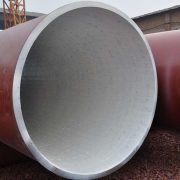
The wear-resistant pipe is manufactured by the self-propagating high-temperature synthesis-centrifugal method. That is, the seamless steel pipe is placed in the tube mold of the centrifuge, and a mixture of iron oxide powder and aluminum powder is added to the steel tube. This mixture is called the thermite in chemistry. After the centrifuge tube mold rotates to a certain speed, The spark ignites the thermite, the thermite immediately burns by itself, and the combustion wave spreads rapidly, and the following violent chemical reactions occur during the spread:
2Al+Fe2O3=Al2O3+2Fe+836KJ
3Fe3O4+8Al=4Al2O3+9Fe+3265KJ

After the thermite reacts, the product is stable α-Al2O3 (corundum) and iron, which emits a lot of heat at the same time. Such heat as under adiabatic conditions, the adiabatic temperature can reach 3753K and 3509K, it makes the original material in the steel pipe and the product after the reaction, even the corundum with a melting point of 2045 ℃ all become molten. Because the reaction is very rapid, only a few seconds, the molten reactant is quickly separated according to the specific gravity under the action of centrifugal force, the specific gravity of iron (7.85g/cm3) is twice that of Al2O3 (3.95g/cm3), the heavier iron Throwing to the inner wall of the steel pipe by centrifugal force, the lighter Al2O3 is distributed in the inner layer of iron.

Due to the rapid heat absorption and heat transfer of the steel pipe, Al2O3 and Fe quickly reach the freezing point and solidify in layers. The finally formed wear-resistant pipeline is composed of corundum porcelain layer, iron-based transition layer, and outer steel pipe layer. High-temperature molten iron and Al2O3 liquid contact with the inner wall of the steel pipe, making the inner wall of the steel pipe half outside. In the molten state, the iron layer and the steel pipe form a metallurgical bond, and the iron layer and the corundum porcelain layer also form a firm bond. The combined compressive shear strength (that is, the strength when the ceramic is laminated in the axial direction) ≥ 15MPa; the wear-resistant pipeline is crushed Strength (that is, the strength when the ceramic inside the tube is crushed from the outside of the tube) ≥ 350MPa;

The advantages of wear-resistant pipes compared with traditional pipes

Wear-resistant pipes are fundamentally different from traditional steel pipes, wear-resistant alloy cast steel pipes, cast stone pipes, steel-plastic and steel rubber pipes. The outer layer of the wear-resistant pipe is seamless steel pipe and the inner layer is corundum. The hardness of the corundum layer is as high as HV1100-1400, which is equivalent to tungsten-cobalt cemented carbide, and its wear resistance is more than 20 times higher than that of carbon steel pipes. The wear resistance of wear-resistant pipes is mainly based on the inner layer of corundum that is several millimeters thick. This is a qualitative leap in resistance to wear compared to wear-resistant alloy cast steel pipes and cast stone pipes not only by composition and structure, but also by thickness.
Wear-resistant pipes quickly occupy the market. In addition to high quality and good performance, it also has a higher cost performance than other wear-resistant, corrosion-resistant and heat-resistant pipes. In terms of wear-resistant pipes of the same specification and unit length, the weight of wear-resistant pipes is only about one-half of wear-resistant alloy cast steel pipes, and the project cost per meter is reduced by 20%-30%; only the weight of cast stone pipes is one-third. Reduce project cost by 5%-10% per meter; wear-resistant pipes used in corrosive or high-temperature situations are only a fraction of stainless steel pipes and nickel-titanium pipes.

Decho is a professional supplier of wear-resistant pipes . If you need any for your project , pls feel free to contact us by email [email protected]
What is tortoise shell net wear-resistant elbow?

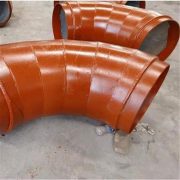
Tortoise shell mesh wear-resistant elbow type name: heat insulation wear-resistant lining elbow.
The composition of tortoise shell net wear-resistant products: steel body + tortoise shell net + pouring wear-resistant material

Product production process:
1. Surface treatment: Blow off the floating dust and polish to remove the floating rust.
2. Welded tortoiseshell mesh: requires more than two solder joints in four grids (the solder joints are required to be evenly distributed)
3. Pouring wear-resistant paint: Stir the powdery wear-resistant material and adhesive thoroughly, and then fill it in the welded tortoise shell grid to ensure that each grid is filled with sufficient wear-resistant material, and the lining is resistant The surface of the grinding layer should be smooth and flat, without obvious unevenness.
4. Wait for the wear-resistant material to fully solidify.

Generally, the minimum diameter of the tortoise shell mesh wear-resistant elbow is above DN100mm. The wear-resistant castable is according to the SH3531-2003 standard, the thinnest is 25mm and the last 30mm. The thickness of the tortoise shell mesh wear-resistant products produced by our company is different due to the nature of the conveying conditions and the different media. They can be designed and produced according to customer needs and industrial and mining needs.

4 advantages of tortoise shell mesh wear products:
1. Strong wear resistance and impact resistance
2. Good shock resistance
3. High temperature resistance
4. No increase in circulation resistance.

Decho is a professional supplier on tortoise shell net wear-resistant elbow. If you need any for your project , pls feel free to contact us by email [email protected]
Ceramic patch wear-resistant tube for power plant

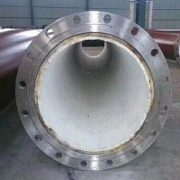
There are two production processes for ceramic patch wear-resistant pipes for power plants: pasting process and inlay process


Ceramic chip type and thickness in ceramic chip wear-resistant tube:

Mutual pressure 60*40, 50*40, 30*25

Mosaic 10*10*10, 10*10*5, 17.7*17.5*5, 17.5*17.5*10

Purity: 92, 95, 97, 99


There are two types of ceramic adhesives for the inner wall of wear-resistant pipes for power plants: inorganic adhesives and organic adhesives. The difference is that inorganic adhesives can withstand temperatures within 500°C, while organic adhesives can withstand temperatures between 120°C and 380°C.


Performance introduction of ceramic patch wear-resistant pipe for power plant:

  1. Wear resistance: The Al2O3 content in the inner ceramic layer of the ceramic composite steel pipe is greater than 90%, the microhardness is HV1000-1600, and the density is 3.8-3.97g/cm3, so it has extremely high wear resistance. The quenched medium carbon steel is ten times higher than the tungsten carbide carbide.
  2. Corrosion resistance: ceramics are neutral materials with stable chemical properties, excellent corrosion resistance and acid resistance, resistance to various inorganic acids, organic acids, organic solvents, etc., and its corrosion resistance is more than ten times that of stainless steel .
  3. Heat resistance: The ceramic layer is dense corundum with a linear expansion coefficient of 6-8×10⁻⁶/℃. Excellent heat resistance, can withstand temperatures above 2000℃, and can work for a long time in the range of -50℃~900℃.
  4. Mechanical properties: It has excellent mechanical properties. Its crush strength is 300-600MPa, compressive shear strength is 20-30MPa, and the mechanical impact test has no obvious cracks under 50t energy impact for 15 times.
  5. Easy to weld: The ceramic-lined composite steel pipe can be connected by welding the outer steel pipe.
  6. The connection method of the product: Welding connection and flange connection of the transition section. If there is no transition section, the welding will be affected. If there is no transition section, the welding residual heat will affect the bonding of the ceramic patch while welding, which will melt the adhesive and make the bonded ceramic patch fall off, thereby reducing the adhesion. Therefore, the quality should be set aside for the transition period.


What are the contraindications of this product?

Inorganic glue can’t take water, organic glue has a higher temperature resistance than inorganic glue


Which industries does this product apply to?

Power plant pulverized coal, ash slag, mine powder, tailings, backfill, coal from coal mines, concentrators, coke particles from coking plants, and materials from sintering plants.


Decho is a professional supplier on Ceramic patch wear-resistant tube. If you need any for your project , pls feel free to contact us by email [email protected]
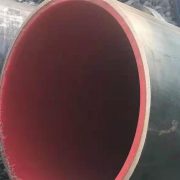
What are the pre-use maintenance and precautions for plastic-lined pipe fittings?

Everyone knows the importance of pipelines in our lives. Many jobs can only be carried out through pipelines, such as underground pipelines and liquid transportation. Our lives are inseparable from the use of pipelines. With the rapid development of science and technology, many new types of pipes have appeared on the market one after another. Plastic-lined pipe fittings are one of them, which have more performance characteristics than our traditional pipes.

The precautions before use are as follows:

  1. Do not store in the open for a long time, avoid sunlight, rain, violent collision, and stack heavy objects in multiple layers.
  2. The sealing surface must not be scraped, cut, scratched, scratched or collided with hard objects.
  3. It is never allowed to use electric welding, wind cutting, fire roasting, etc. on the pipe fittings and fittings after the lining, and the distance from the heat source should be more than 1 meter.

The use of plastic-lined pipe fittings has undoubtedly brought new development and opportunities to our pipeline industry, and also brought a lot of convenience to our lives. Now it is very popular among users and is very suitable for the current development needs in our country. Good maintenance of plastic-lined pipe fittings will help extend its service life.

Decho is a professional supplier on plastic-lined pipe fittings. If you need any , pls contact us freely by email [email protected]

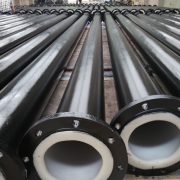
The processing method of plastic-lined steel pipe determines its performance

The forming principle of plastic-lined pipes used in water circulation transportation:

The steel-lined plastic pipe adopts the original steel body, electric furnace heating, plastic material inner filling centrifugal molding and external hot compress centrifugal processing, and the sealing surface of the connecting flange needs manual hot compress molding. All pipelines and water contact surfaces are all lined with plastic materials, the pipeline connection is convenient and fast, and it has reliable connection strength and anti-permeability. At the same time, all the connection joints are of detachable structure, coupled with the use of pipe fittings that can change direction at will, making maintenance more convenient.

Power pipeline and circulating water pipeline performance advantages:

1. Good corrosion resistance: It is an ideal pipeline for transporting corrosive gas media such as acid, alkali and salt.
2. Good permeability resistance: using rotomolding process or tight lining process, the inner lining is smooth and flat, the friction coefficient is small, and it is not easy to scale, so the permeability resistance is excellent.
3. High operating temperature: under the condition of strong corrosive medium, the applicable temperature range is -29℃—200℃
4. Vacuum resistant. In the range of -29°C to 150°C, it can be used under vacuum conditions. In chemical production, it is often caused by the backflow of local medium due to cooling, longitudinal discharge, and asynchronous operation of pumps and valves to produce a vacuum state.
5. Adopting standardized standard configuration, especially the pipes and fittings used in chemical pipelines are highly interchangeable, which provides great convenience for installation and spare parts.

The rotomolding process design is flexible and can be made into parts with different shapes and sizes. Application and plastic-lined pipes to save consumption costs will also develop in the direction of increasing output.

The plastic-lined pipe is lined with food-grade polypropylene, which can be used in the chemical, food, pharmaceutical and drinking water industries. Common plastic-lined pipes are: polypropylene steel pipes, polyvinyl chloride steel pipes, polyethylene steel pipes, polyolefin steel pipes and polytetrafluoroethylene steel pipes. Because the plastic-lined pipe has good corrosion resistance, weather resistance, soil and marine life, and physical properties, it has been widely used in agricultural production. At the same time, the use of plastic-lined tubes will not produce toxic side effects on agricultural products, and will not breed bacteria, so that the quality of crops can be guaranteed. From an operating point of view, the pipe wall of the plastic-lined pipe is smooth, and at the same time, it can improve transportation efficiency and have a longer life.


Decho is a professional supplier of plastic-lined steel pipe . If you need any for your project , pls feel free to contact us by email [email protected]
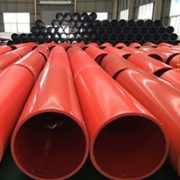
What are the advantages of UHMWPE tunnel escape pipes?

Ultra-high molecular weight polyethylene tunnel escape pipeline has excellent comprehensive performance, and has unparalleled impact resistance, compression resistance, abrasion resistance, aging resistance, light weight, chemical resistance, sanitation and non-toxicity. It is not easy to adhere and is called “magic plastic” in the world. Therefore, it has broad prospects for citation in the fields of machinery, transportation, textiles, papermaking, mining, agriculture, and chemicals.

1)Light weight, only about 1/3 of the weight of steel pipe, easy to disassemble and transport.

2) The pipeline has good toughness and high impact resistance. It deforms instantly when impacted by a strong external force, absorbs a large amount of impact energy, and then quickly restores its original shape, providing a very safe and reliable guarantee for emergency rescue in highway tunnel construction.

3) The pipe ring has high rigidity, good pressure resistance, and is not easy to deform. When a highway tunnel collapses during construction, its pressure bearing capacity and environmental damage resistance far exceed those of ordinary pipes.

Decho is a professional supplier of UHMWPE tunnel escape pipes. If you need any for your project , pls feel free to contact us by email [email protected]
 

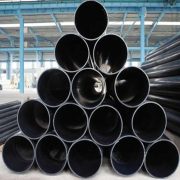
What are the uses of ultra-high polymer pipes?

Ultra-high polymer pipes are called non-metallic pipes, which should belong to plastic products. The raw material of ultra-high polymer pipes is PE, but the molecular weight is much higher than ordinary molecular weight, and the performance is better than ordinary PE materials, such as: wear resistance and resistance Corrosion, impact resistance, yield strength and breaking strength, etc. In particular, its wear resistance is higher than that of materials such as polytetrafluoroethylene, nylon, and carbon steel. Ultra-high polymer pipes were used more abroad in the early days. After continuous research and development, the ultra-high polymer pipe technology has gradually matured in China, and the heavy industry has gradually adopted this type of pipe. It has become a new type of thermoplastic engineering pipe with moderate price and excellent performance. In terms of price and quality, it is a practical ideal pipe.


Ultra-polymer pipes can be used for the transportation of various highly corrosive and highly abrasive liquids or solid-liquid mixtures, such as various acid, lye, crude oil, tailings, mud, coal water slurry, and power plant ash and slag discharge and many more. Compared with seamless steel pipes, ultra-polymer pipes have significant advantages and increase service life. Under strong corrosive and high abrasive conditions, the service life can be increased several times or even dozens of times; due to the non-sticky inner wall of this pipe And the friction coefficient is small, which can reduce the conveying pressure or reduce the diameter of the conveying pipe, which is of great significance for long-distance conveying; because the thermal conductivity of this pipe is more than 10,000 times smaller than that of steel, it can greatly reduce the heat preservation cost of the conveying pipe. Transporting crude oil and other materials in cold regions and winter is of great significance.

It can be seen that ultra-high polymer pipes have excellent use characteristics and are used in the mining industry, coal industry, oil exploration, thermal power generation, chemical industry, river dredging and other industrial fields. With the continuous development of industrial technology, the fields in which ultra-polymer pipes will be used will become more and more extensive.


Decho is a professional supplier of ultra-high polymer pipes . If you need any for your project , pls feel free to contact us by email [email protected]
What are the commonly used pipeline anticorrosive coatings?

Classification of pipeline anticorrosion

Pipeline anti-corrosion is divided into pipeline main body anti-corrosion and patch weld anti-corrosion

How to choose pipe repair materials?

It depends on the material of the main pipeline anti-corrosion layer. Commonly used mending methods include petroleum asphalt mending, epoxy coal tar mending, adhesive tape mending, powder epoxy mending, and PE heat shrinkable material mending. If the main body of the pipeline is a three-layer PE composite structure, the first choice is the three-layer PE heat-shrinkable joint material. The patching of single-layer epoxy powder coating can adopt three methods: epoxy powder, adhesive tape + primer and three-layer PE heat shrink patching.

What are the commonly used pipeline anticorrosive coatings?

Epoxy anticorrosive coating

  1. Ring primer
  2. Iron red high anti-corrosion and anti-rust primer
  3. Zinc-rich epoxy anti-rust primer
  4. Zinc-rich epoxy anti-rust primer
  5. Cloud iron epoxy anti-rust primer
  6. Cloud iron epoxy anti-rust primer
  7. Hongdan epoxy antirust paint
  8. Iron red workshop primer
  9. Iron red epoxy deck paint
  10. Epoxy enamel
  11. Epoxy anticorrosive top coat
  12. Epoxy coal tar heavy anti-corrosion coating
  13. Epoxy coal pitch anti-rust primer
  14. Black antistatic and oil resistant primer
  15. Black antistatic and oil resistant finish
  16. Inorganic zinc silicate primer

Acrylic \ Polyurethane coating

  1. Polymer interpenetrating network anticorrosive primer
  2. Polymer interpenetrating network anticorrosive coating
  3. Gray aluminum powder graphite alkyd enamel
  4. Polyurethane anti-rust primer
  5. Polyurethane intermediate paint
  6. Polyurethane anticorrosive finish
  7. Acrylic polyurethane enamel

Chlorinated rubber anticorrosive coating

  1. Chlorosulfonated polyethylene topcoat
  2. Chlorosulfonated polyethylene primer
  3. High chlorinated polyethylene topcoat
  4. High chlorinated polyethylene primer
  5. Chlorinated rubber thick build deck paint
  6. Chlorinated rubber thick build anti-rust paint
  7. Chlorinated rubber ship hull paint
  8. Chlorinated rubber anticorrosive finish
  9. Chlorinated rubber waterline finish
  10. Perchlorovinyl varnish
  11. Perchloroethylene external enamel
  12. Perchlorovinyl primer
  13. Perchloroethylene anticorrosive paint

High temperature resistant anticorrosive coating

  1. Silicone heat-resistant primer
  2. Silicone heat-resistant enamel
  3. Silicone heat-resistant paint enamel
  4. Silicone heat-resistant paint
  5. Silicone heat-resistant paint
  6. Silicone heat-resistant paint
  7. Silicone heat-resistant paint

Anticorrosive coating for the inner and outer walls of oil tank

  1. Iron red epoxy modified polyurethane paint resistant
  2. Gray epoxy modified polyurethane paint resistant
  3. Epoxy polyurethane anticorrosive finish

Epoxy oil-resistant finish Interior and exterior wall architectural coatings

  1. Environmentally friendly interior wall paint
  2. Interior wall paint
  3. Exterior wall paint
  4. Elastic exterior wall paint

Special coating

  1. Reflective paint
  2. Fluorescent paint
  3. Gold paint
  4. Plastic paint

Cold galvanized Powder coating

  1. Powder coating
  2. Pure epoxy powder coating
  3. Epoxy polyester powder coating

Color steel plate waterproof coating

  1. Color steel plate waterproof coating
  2. Color steel plate waterproof coating
  3. Stitched polyester waterproof cloth


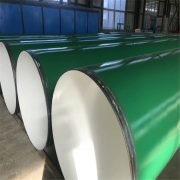
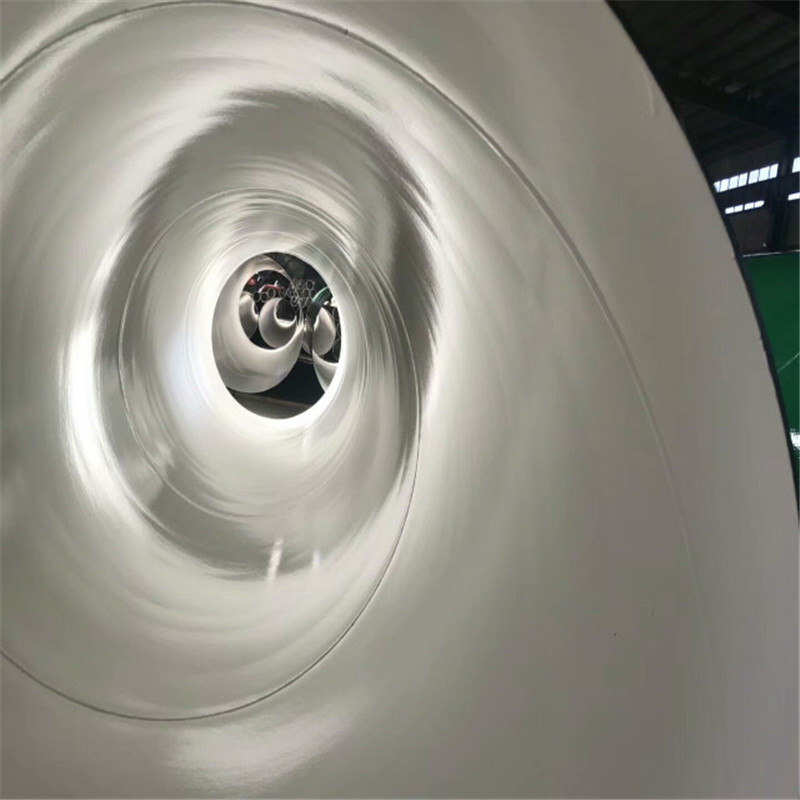
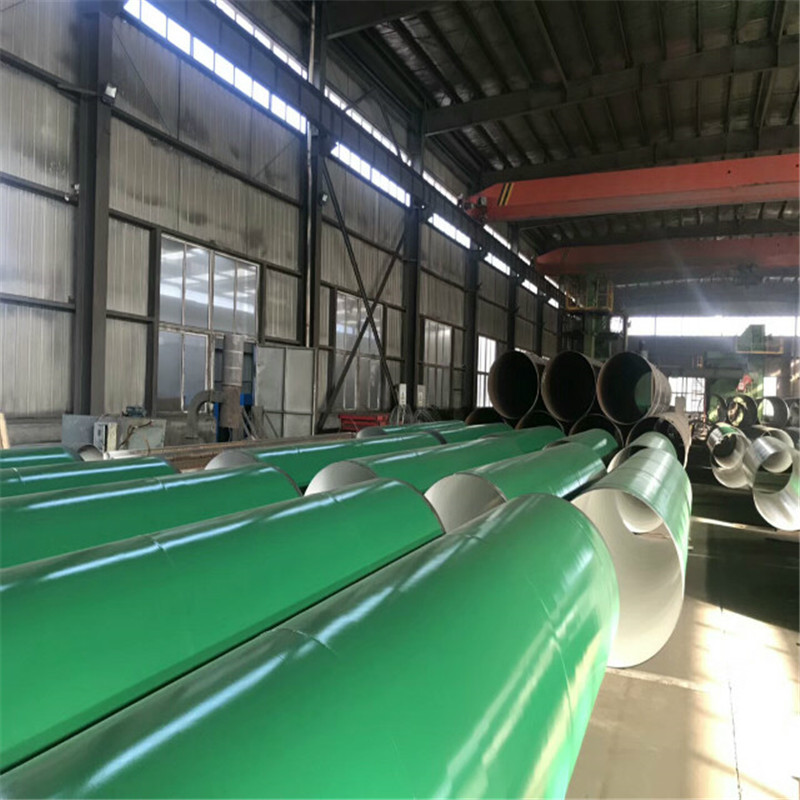
Decho is a professional supplier of steel pipes with anti corrosive coating . If you need any for your project , pls feel free to contact us by email [email protected]